

Visions of the Vernacular: Architecture in the Masterworks Collection
in the Butterfield Gallery
May 1 – September 12, 2026
Architecture is a crucial component of what makes Bermuda so historically and visually unique. Throughout the Island’s modern history, local and visiting artists have reflected this by foregrounding Bermuda’s architectural vernacular as a subject in their work – studying, celebrating, and re-interpreting its forms. Visions of the Vernacular: Architecture in the Masterworks Collection presents selected works of art from the Permanent Collection, dating from the early nineteenth century to the present day, which illustrate the distinctive character of Bermuda houses and the Island’s broader built landscape.
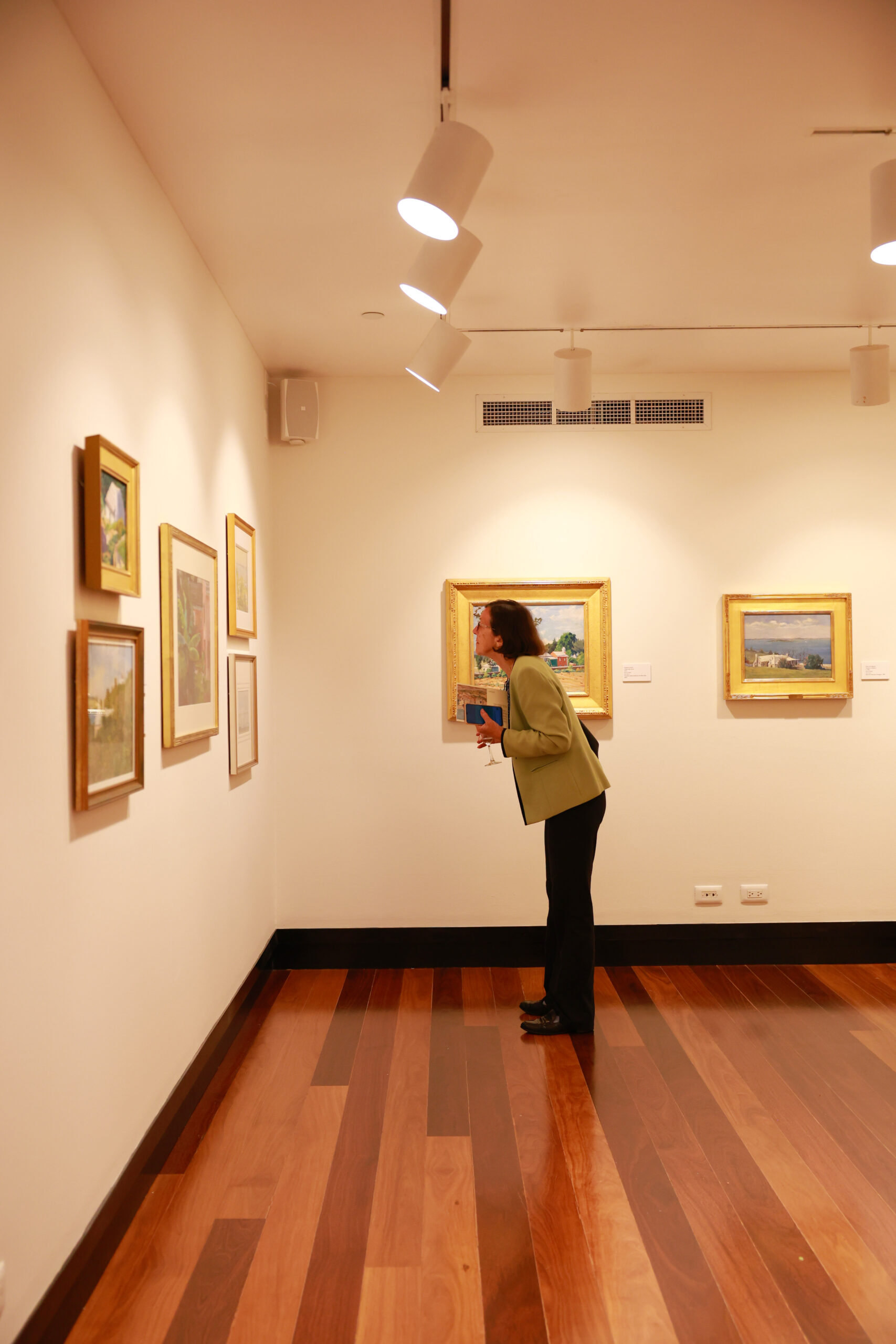
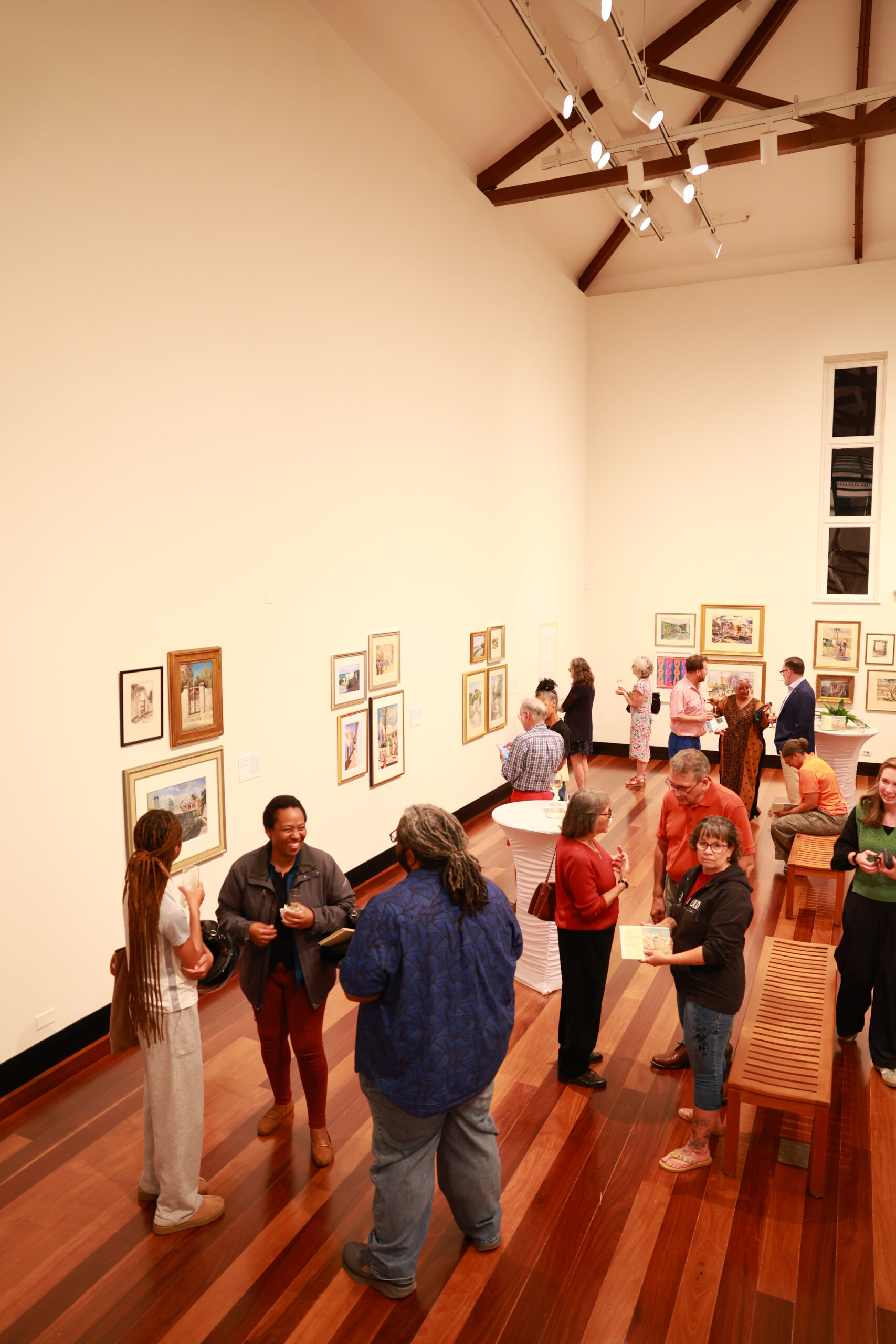
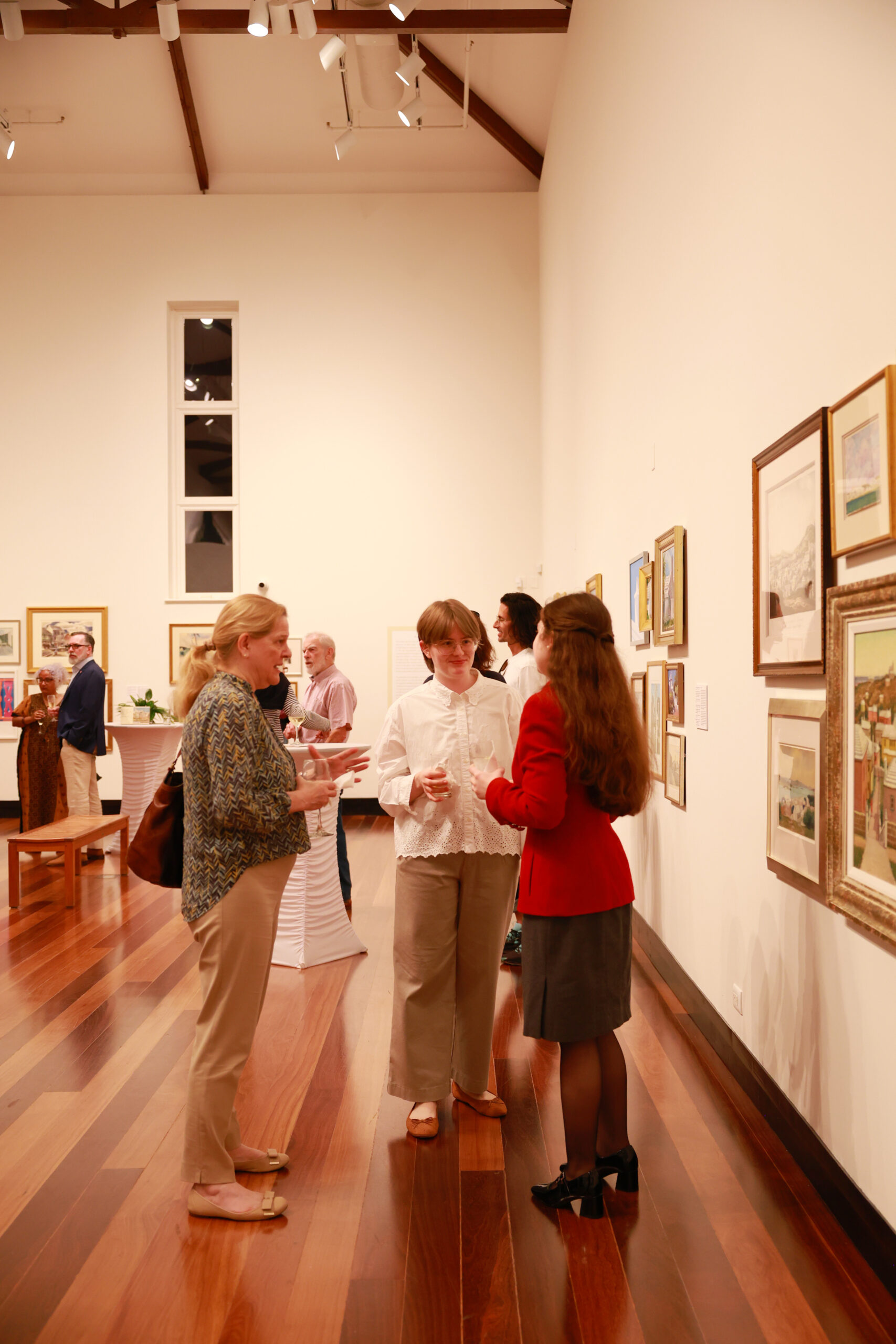
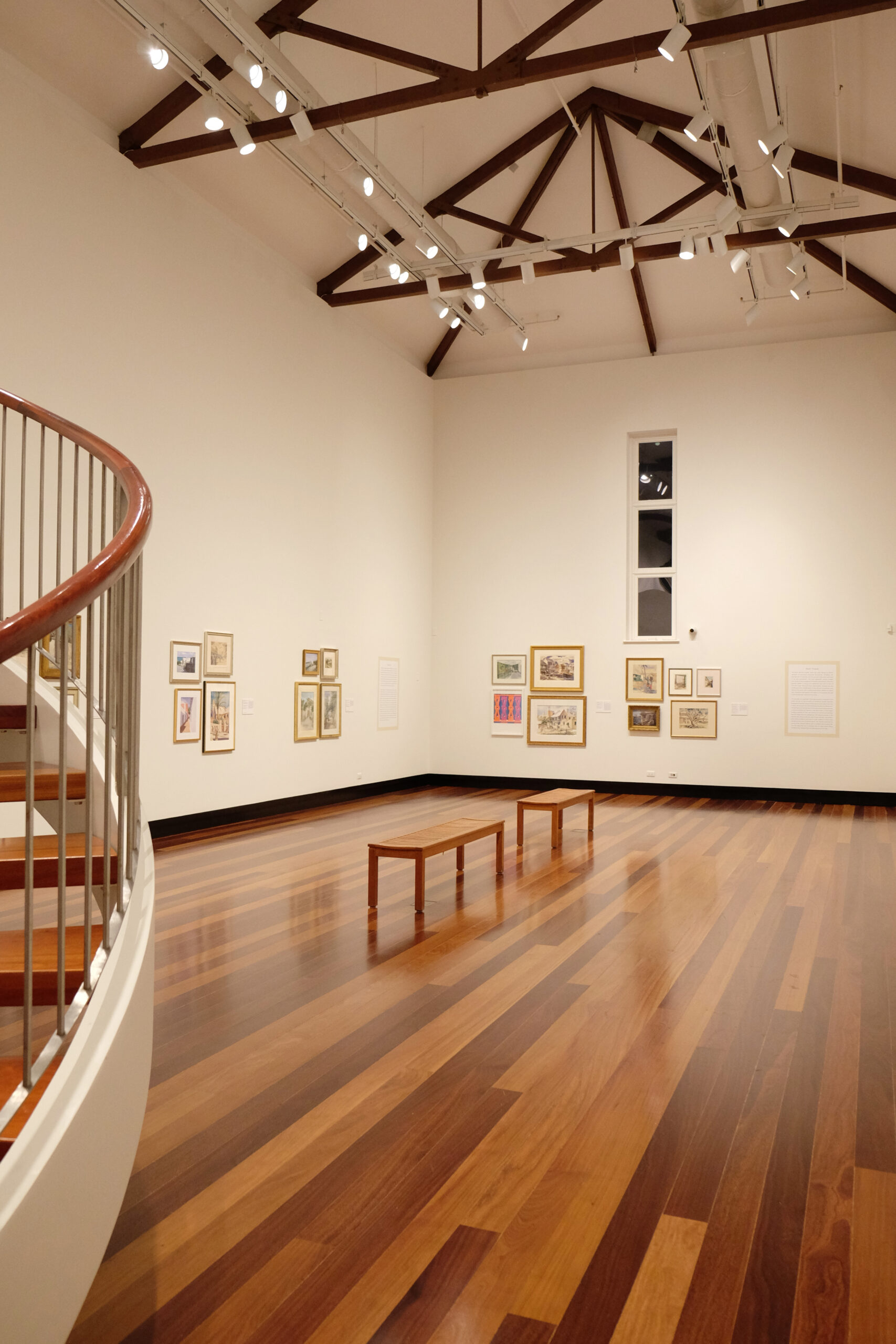
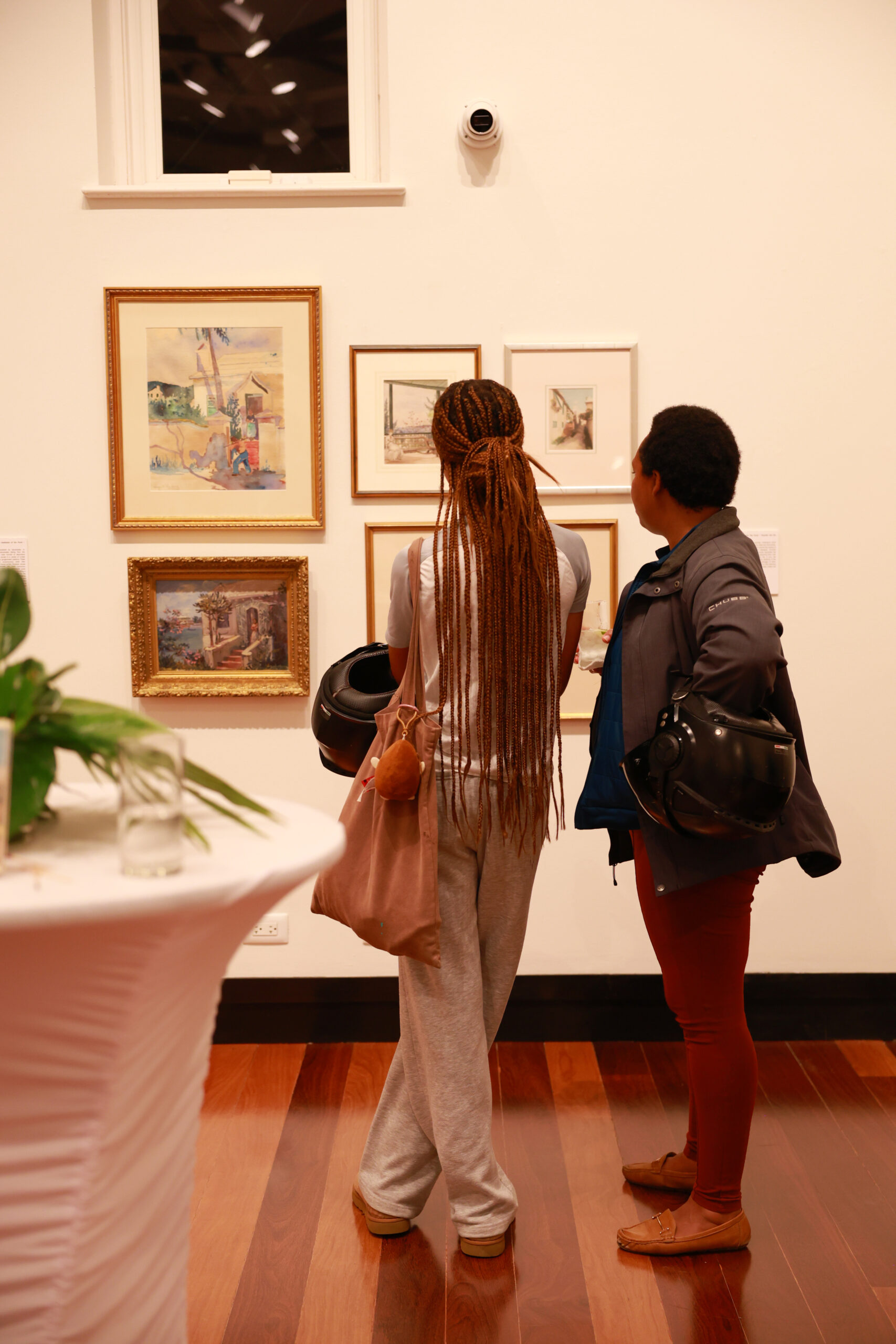
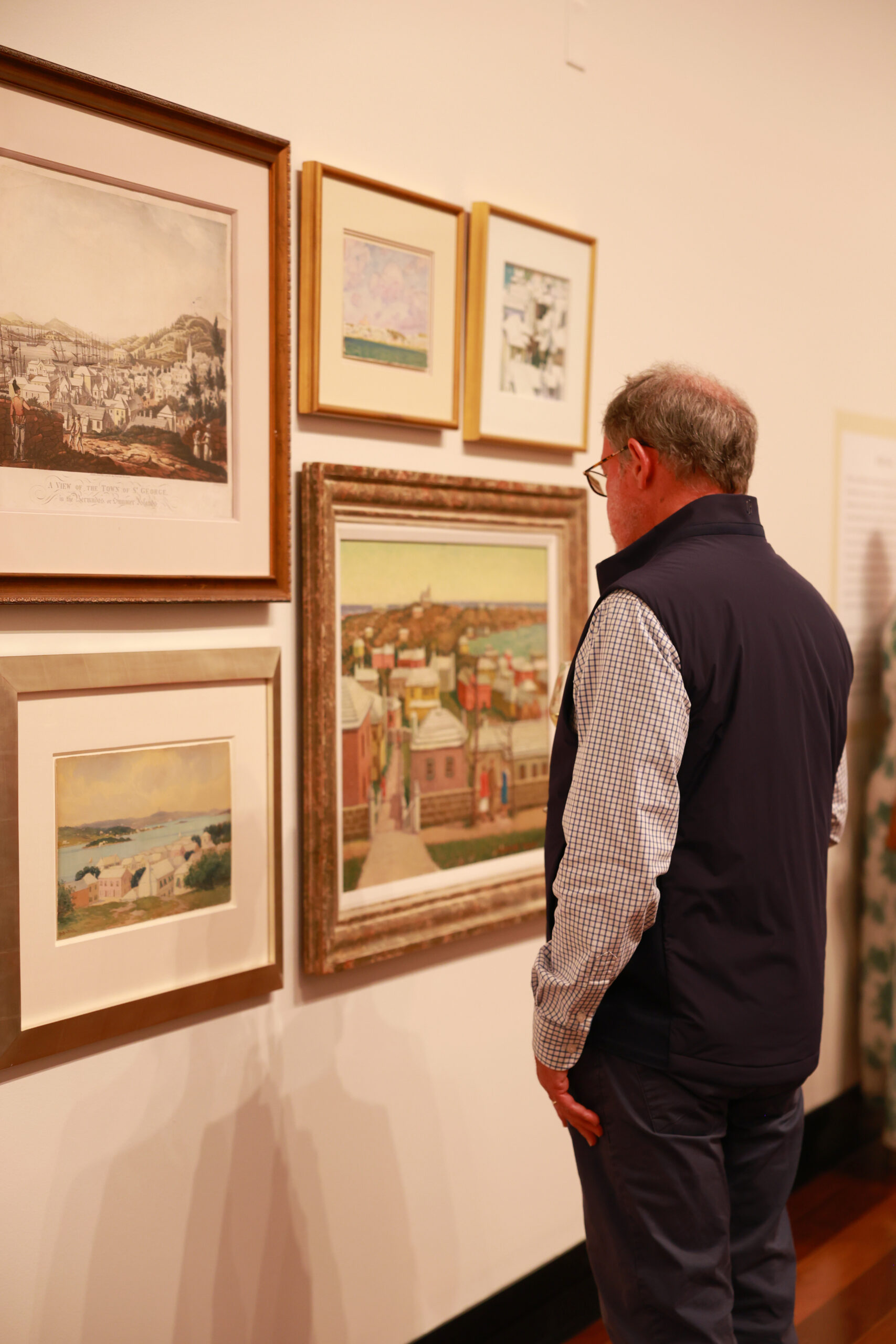
Visions of the Vernacular: Architecture in the Masterworks Collection highlights fundamental elements of Bermudian architecture which artists in the Permanent Collection represent from a variety of perspectives – depicting the geometric patterns of rooflines, the half-secluded spaces of verandas, and the framing forms of gates and pillars. These images invite the viewer to consider the social functions and symbolic meanings of these and other vernacular architectural features, as understood by the people living within and around them as well as the artists illustrating them.
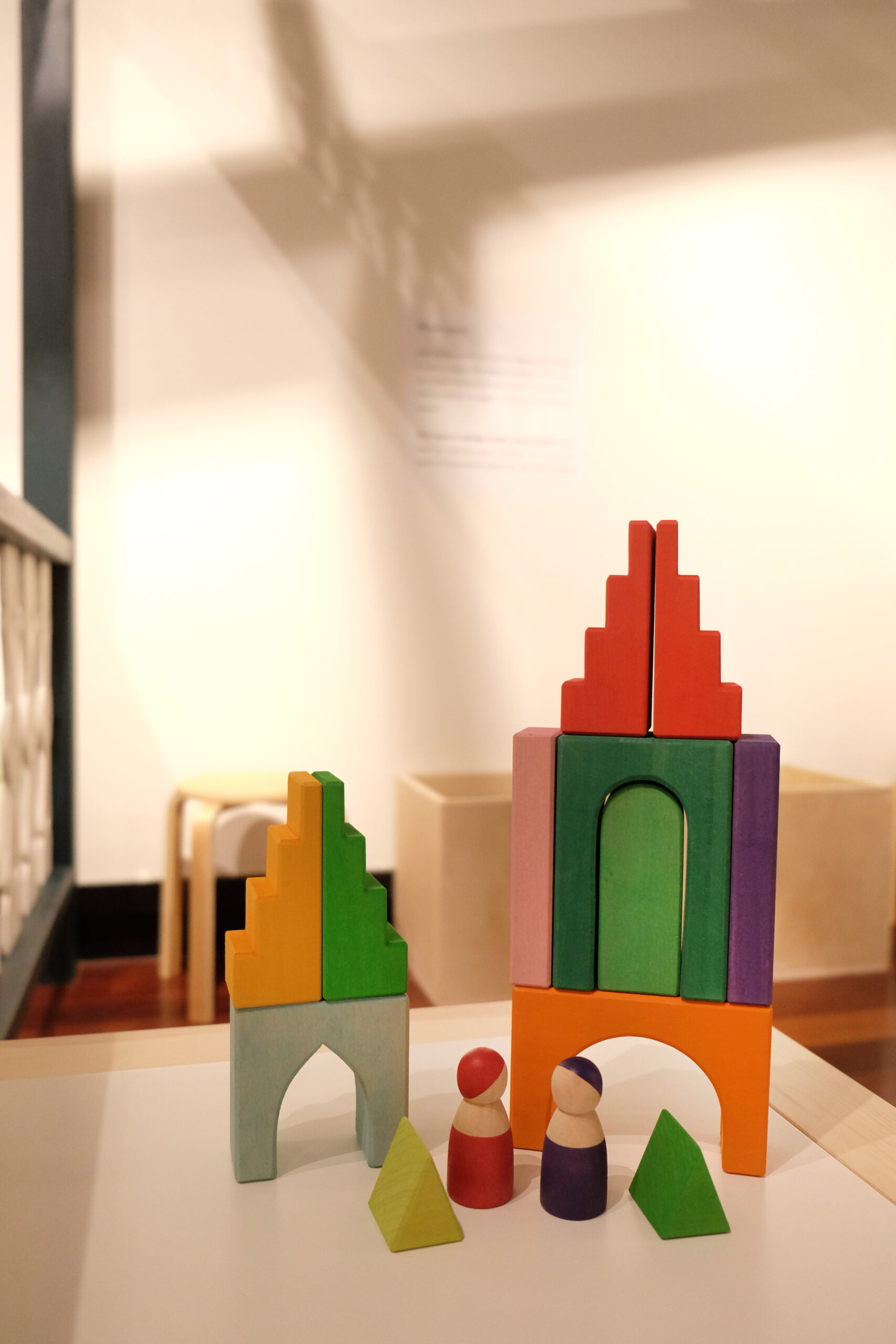
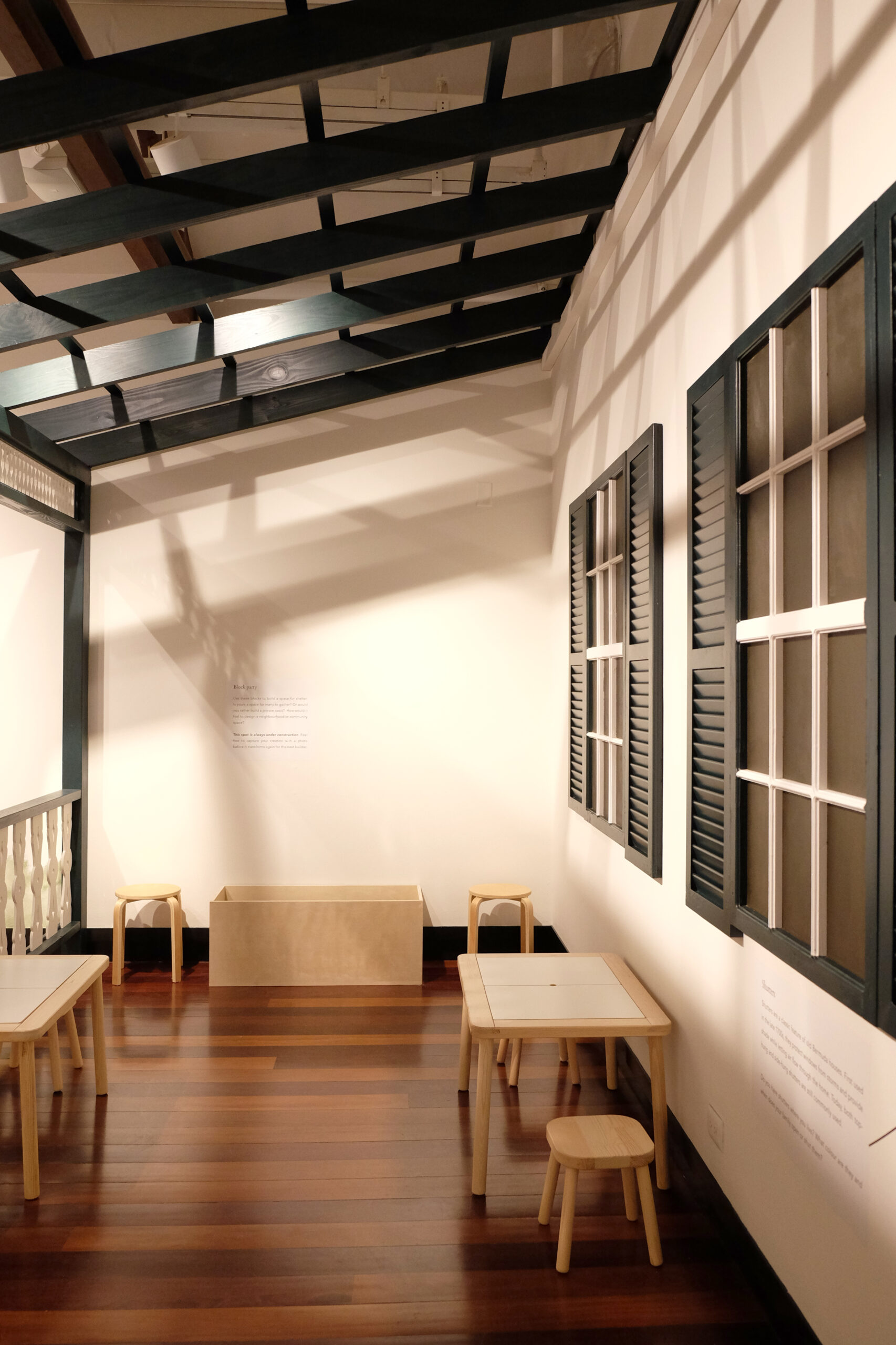
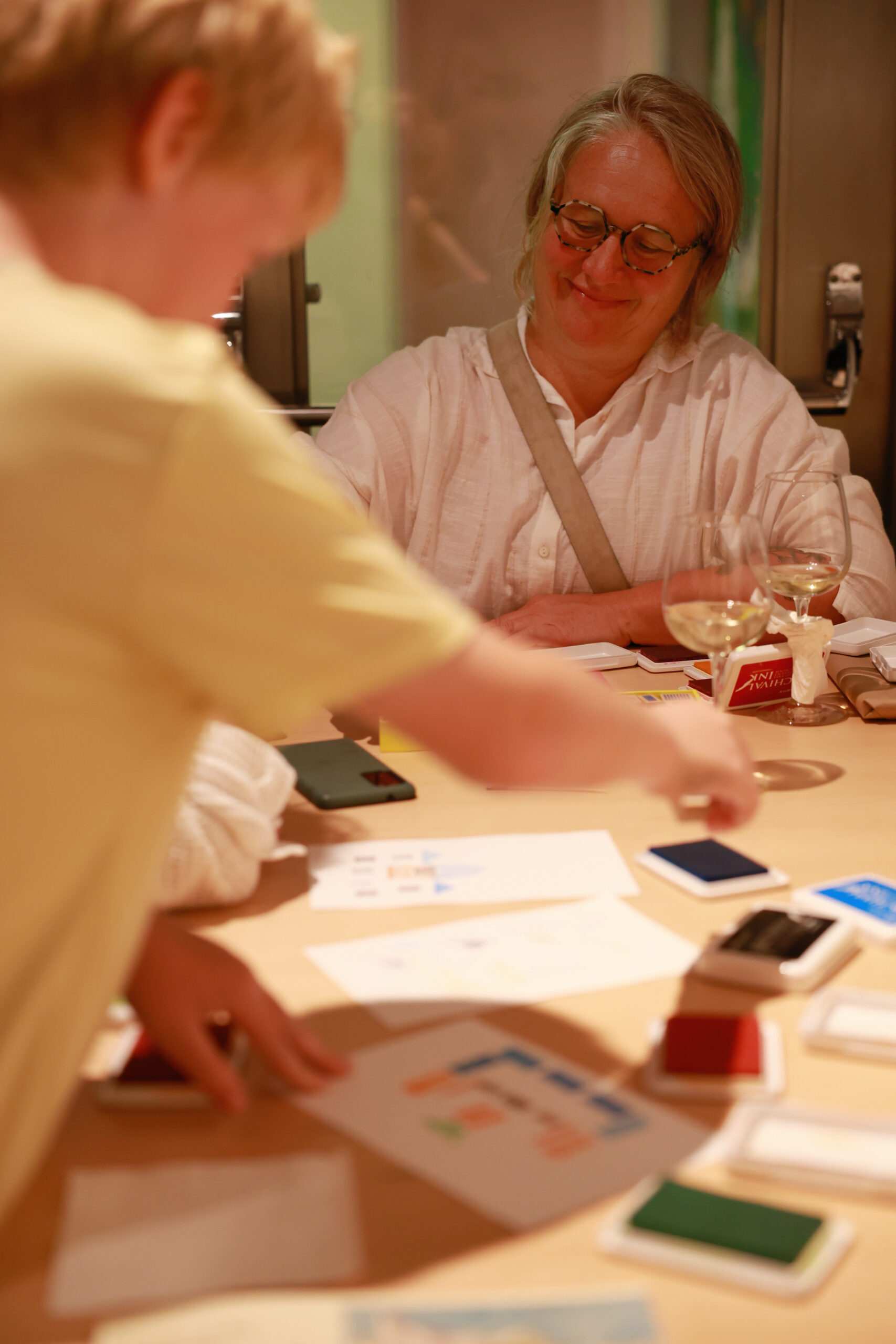
The exhibition is complemented by a participatory installation by Kimberley Fisher and Theo Rehbach, functioning as both a workshop and shared art-making space. The installation encourages reflection on vernacular forms as spaces of memory, identity, and lived experience.
The opening reception was held on Friday, May 1 from 5:30-7pm.
Visions of the Vernacular: Architecture in the Masterworks Collection is curated by Dr Sara Thom and Max Grainge. The exhibition will be on display from May 1 – September 12, 2026.
INTERN’S CHOICE | Summer 2026
Each summer we invite our Interns to contribute an Intern’s Choice review of a work, exhibition, or artist on view. Scroll down to learn more about the interests of our 2026 interns, Eva O’Connor and Noa De-Rosa-Anderson.
Noa DeRosa-Anderson | Springfield, Robert Steinmetz
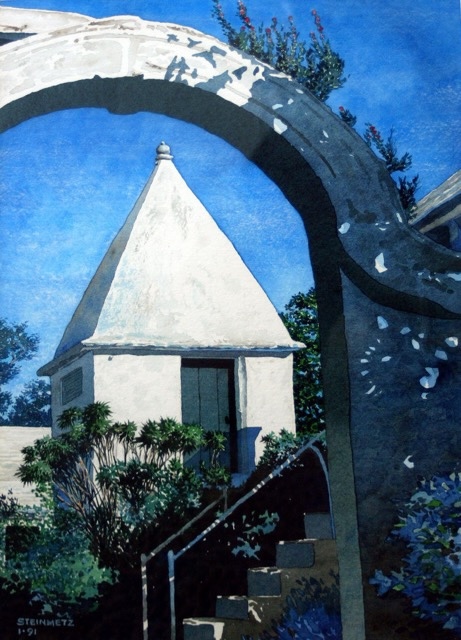
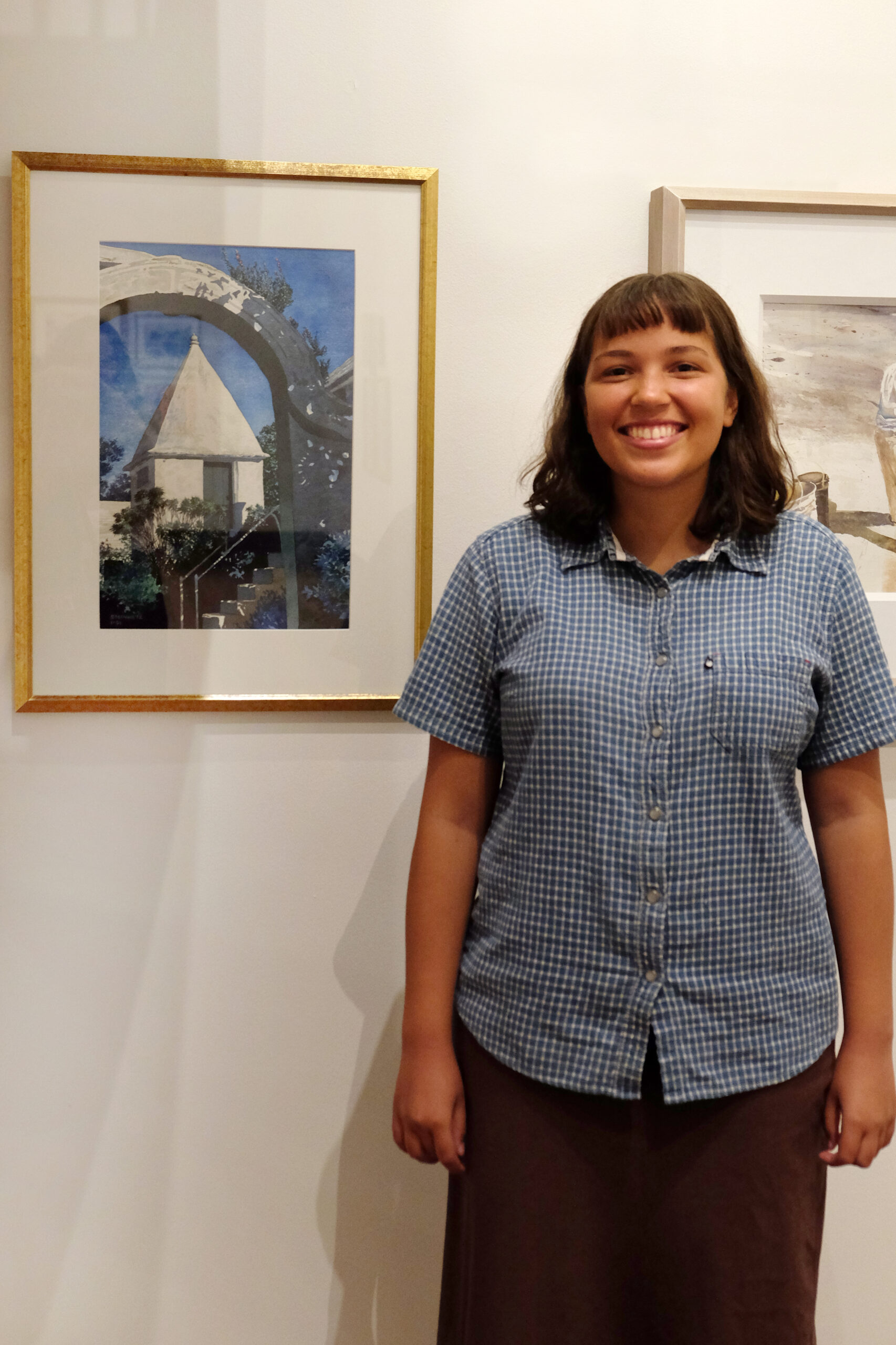
Springfield by Robert Steinmetz
By Noa DeRosa-Anderson
Robert Steinmetz’s 1991 watercolour, Springfield, depicts a Bermudian home, lilting between shadow and sunlight. Walking through the gallery, I was drawn to this painting as it reminds me of my Grandparents’ yard in Southampton. The house, too, is white and the garden verdant. My young memories of visiting their home are connoted by the same saturated greens, blues, and whites from Steinmetz’s palette. Up to my shins in the grass, my four-year-old self idly braided the frangipanis outside into bracelets and headbands and supposed that the houses were made of chalk. I sometimes looked up at the house with an eye twisted shut and a head cocked sideways to see through the blinding wash of sun. Steinmetz, similarly, seems to look at the Bermudian homestead he recreates from an unconventional angle. The block home is white-hot under the recognizable pulse of summer beating down outdoors. The shadows cast throughout mimic the respite found in a gust of wind, rattling the foliage.
The painting itself is a depiction of the titular estate in Somerset, maintained by the Bermuda National Trust, so it may be literally nostalgic for some. Steinmetz’s crisp watercolour contours replicate the limestone architecture that is so characteristic of Bermuda. The paint application is thin; the layers do not build on the surface. Neither thick nor translucent, the paper is a plane of colour. As such, the piece is quite photographically realistic. However, Steinmetz finds a unique viewpoint through which to paint the home.
Despite its familiarity, Steinmetz’s distinctive framing subverts the image of the Bermudian home. What might have been idyllically symmetrical is focused in and fragmented. An arched entryway frames the piece, acting as a vestibule into the unit. The looming arch places a buttery, an outdoor structure Bermudians have historically used for refrigeration, at the focal point, scarcely left of center. In the skewed painting, what is in frame is only a glance at the full home, leaving questions unanswered and interest peaked. The world inside the courtyard is enigmatic, mystic in its inscrutability. In the entryway’s prominence the viewer is rendered just that, an external watcher, peering in. Simultaneously, the arch creates close, intimate quarters. Two structures are indicated on either side of the arch by their archetypal stepped roofs.
The buttery itself is a pyramid on a rectangular cube. The smooth roof begins at its eave and culminates at the circular finial. With a bachelor’s degree from Cornell University’s College of Art, Architecture and Planning, Steinmetz is a former architect, and much of his work consists of watercolour buildings and architectural designs. His trained eye for structure yields precision, his brush is intent on accuracy.
The buttery is pristine white, backgrounded starkly against the blue-sky. Shadows shift across the grove, and the sun pours in from the East to bleach the serene limestone mass. A stairway descends from behind the arch, towards the buttery, leading the eye to that geometric focal point. The structure itself has been upended by the flora and greenery springing opportunistically out of the courtyard’s crevices, leaving little ground to stand upon. With the foundation obscured in the rough, the architecture merges with its surroundings. Home and nature are, however, delineated by a slight blue rim. The greenery is abundant and each leaf is a brushstroke. A spritely bush displays it’s scrawny branches in front of the buttery. The flowers appear in swaths of colour. Pink tendrils stretch skyward atop the arch, and two blue bushes lean into the courtyard down its opposite end.
Beyond composition is the quiet delicacy of detail. Indented into the buttery is a triple-slatted green door and a vent. The shade projected onto the entryway is latticed by a tree outside the frame, suggesting an expanse unseen. Even the shadows on the staircase are made intricate by a dappling of sparse light. The arch undulates between clotted cream and distilled white to detail etchings on its band. The beam’s underside is molded in slate grey shadow. Depth trisects the painting; with each salient structure, the perspective adjusts and size decreases.
The piece is cluttered in composition but pared down in style. It is almost confectionary; a slice of the whole cake frosted in white and blue. Although the artist does not take much artistic liberty in his watercolour techniques, Steinmetz creates a particularly beautiful Bermuda through his attention to form. In the restricted scope of Robert Steinmetz’s Springfield, the viewer may catch glints of Bermuda’s exquisite landscape and leave wanting more.
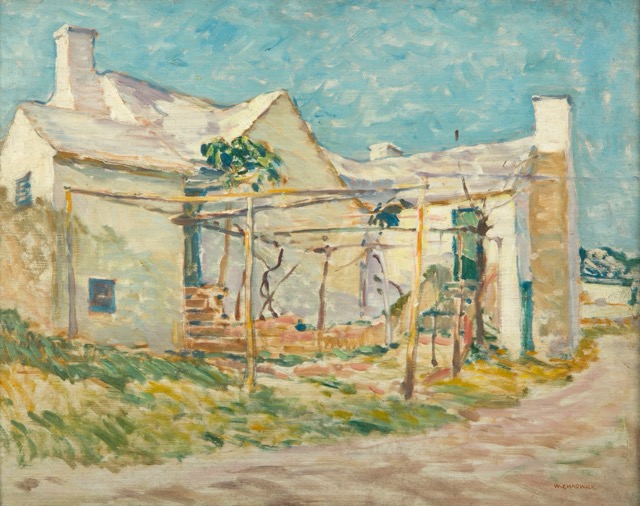
Eva O'Connor | Ashley House, William Chadwick
Bermuda’s distinctive limestone architecture has long provided artists with a uniquely local subject. Built from limestone quarried across the Island and finished with the characteristic white limewash that reflects sunlight and collects rainwater, these buildings possess a visual identity unlike almost anywhere else. For painters, limestone offered more than architectural or iconic interest. The pale surface of these houses became an ideal vehicle for exploring the changing effects of Bermuda’s sunlight.
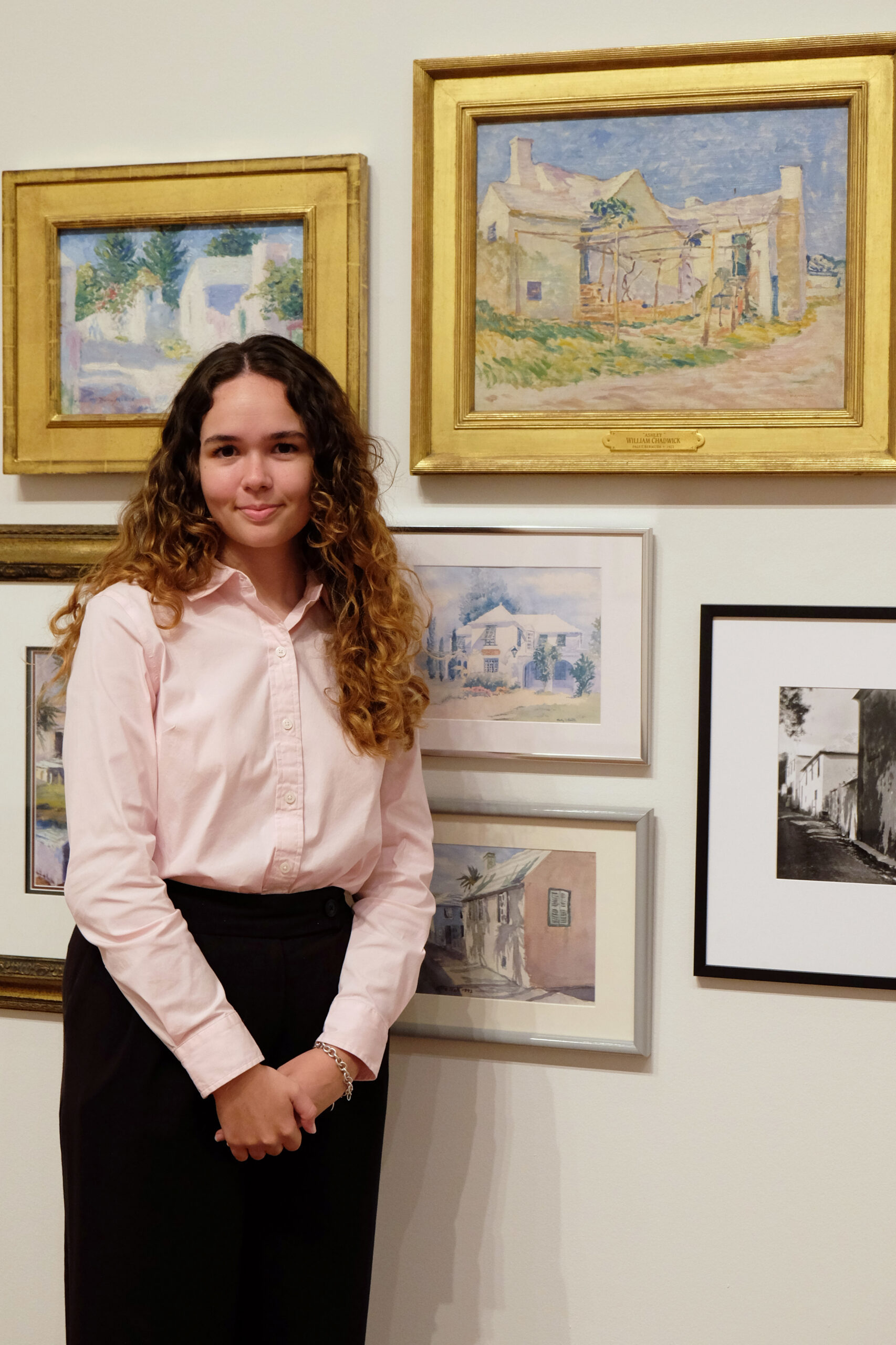
At first, the composition appears straightforward: a white house sits quietly within a lush landscape, partially framed by trees whose branches draw the eye across the piece. Closer attention reveals that the painting is less concerned with architectural documentation than with the subtle ways light alters our perception of form. Chadwick constructs its surfaces through a lattice of creams, violets, blues and greys, allowing the limestone to shimmer under the midday sun.
This sensitivity to colour is what makes this painting so striking. Rather than relying on bold, strong outlines, Chadwick models the house through subtle shifts in light and shadow. The result is a structure that feels integrated within its environment rather than isolated from it. Trees filter the sunlight, patches of shade drift across the façade, and the surrounding vegetation echoes the gentle rhythm of the building’s rooflines.
Chadwick spent time at the Old Lyme Art Colony in Connecticut, one of the leading centres of American Impressionism in the early twentieth century. There, artists adapted Impressionist ideas to the distinct qualities of the New England landscape, favouring direct observation and an increasingly luminous palette. Chadwick later brought this sensibility to Bermuda, where the Island’s intense light and limestone architecture offered new visual possibilities. His work reflects the broader artistic exchange that connected Britain, the American East Coast, and Bermuda, demonstrating how ideas travelled across the Atlantic while taking on distinctly local forms.
This approach feels particularly suited to Bermuda. The Island’s brilliant subtropical light is unusually intense, creating sharp contrasts against the pastel houses. Limestone, in particular, becomes a remarkably responsive material. Its porous texture catches sunlight differently throughout the day, while shadows introduce violets, blues and cool greys that bring the walls to life. Chadwick’s painting invites viewers to slow down and observe these subtle transitions.
My academic interests lie primarily in Impressionist and Modern painting, and I am particularly drawn to works like Ashley House, which show how international artistic movements were interpreted through Bermuda’s unique landscape and culture.Chadwick responded to the Island’s unique environmental conditions, adapting an observational approach to a landscape unlike those that had inspired earlier Impressionists. His painting suggests that Bermuda’s light demanded its own visual language.
Ashley House reminds us that architecture is never experienced independently of its surroundings. Instead, limestone, vegetation and sunlight work together to produce the visual character that has come to define Bermuda. Chadwick’s careful observation transforms an everyday scene into a nuanced study of colour, atmosphere and place, encouraging us to look beyond the apparent simplicity of white walls and recognise the extraordinary richness contained within them.